Safe Struggle: Homestead Your Mind
One of the keys to moving forward in life includes the feeling of safety. Our ability to function in a healthy manner is tied to how safe we feel. We have found that homesteading projects allow us to create and further develop a healthy and safe mindset. Your ability to learn is tied to how safe you feel when attempting to learn something new.
Human beings need physical, emotional, and psychological safety in order to fully learn, connect, and grow.
Many of us homestead in order to be self-sufficient, therefore feel secure and safe. We want to build our own world and know the process that got us there. We want to know the origins of any product we create. We trust the ingredients in our homemade bread and we know we didn’t spray pesticides on our tomatoes. But, as we tackle projects as homesteaders, we inevitably face challenges. We must shift our mindset, which Darrin and I refer to as Homesteading Our Mind.
And when we struggle with new projects, we call this our “safe struggle.”
Most of us can recall a moment in our lives in which we were asked a question in school and simply froze and couldn’t answer. As a teacher, I was deeply cognizant of the importance of allowing students time to think and process before ever posing a question. It’s not productive to put a learner “on the spot.” These moments in life stick with us because it feels unsafe and triggers so many emotions – fear, humiliation, doubt, confusion and so on.
When our brain feels that danger is afoot, it becomes terribly challenging to think and focus.
Often, we freeze when we’re required to “perform” in public. When our nervous system senses fear, many of us go into “survival” mode, which may allow us to survive, but is simultaneously unproductive. Another way to think of it is this – if you have to choose fight or flight, pick the fight and reframe it as a safe struggle.
Our nervous system is geared to keep us safe and will prioritize safety first. Therefore, we might struggle to think cognitively during a learning experience, especially when it involves a challenge we must tackle in order to unravel a problem. Instead of focusing on the learning, our nervous system is focused on creating safety. Your nervous system creates a “safety drill” – simply a way to direct you to safety as quickly as possible.
If you’ve grown up in a home in which life was unpredictable, or currently perhaps you are in a home or work environment that creates emotional stress, your nervous system develops routines for handling this stress. This can make it incredibly difficult to learn at times.
Our nervous system remembers what strategies have worked to keep us safe, and will set that “safety” process or “drill” in motion. Sometimes this process is unproductive. It’s our job to stand back, watch the process, and tell our nervous system that we no longer need the safety drill and we’ve got a new solution to handling “fear” or the “unknown.” One “safety drill” my nervous system follows is physical exhaustion – I suddenly feel the deep need to crawl into bed, shut down, and sleep. When I wake up, I always feel better. That safety drill works if I’ve got a couple free hours every day to sleep on cue – but in real life this isn’t feasible! When I am in the middle of a project I need to finish, no matter how challenging, I can’t meander off to a bed to crash out for awhile. I simply need to get the task at hand done.
Many of these “safety drills” develop earlier in our lives and become routines for handling stressful situations.
As someone who grew up in a household filled with chaos, I am very conditioned to walking on eggshells. I assume something will go wrong. I prepare meticulously to avoid mistakes, but deep down I assume failure is inevitable. As a result, I’m prone to have a meltdown in some shape or form, or simply become immobilized and have no idea how to move forward when faced with a challenge. Many of us go into “fight or flight” mode. I remember my bedroom being a safe zone as a child, and crawling into bed at night was an opportunity to shut down. If something bad had happened during the day, my parents simply pretended it never happened the next morning. Sleep miraculously erased stress. As a child, this strategy became a temporary fix and my nervous system recognized it.
When tackling new and unfamiliar projects I thrive on predictability and routine. I struggle greatly with the idea of simply rolling with it. I fear the other shoe may drop at anytime.
I am developing the ability to feel safe while simultaneously allowing myself to struggle as a learner – this is truly one of my greatest challenges in life.
When we don’t feel safe, our ability to think creatively, out of the box, or take risks is deeply impacted. As adults, we can stand back, and observe ourselves in a learning situation to shift this mindset. We can recognize patterns, determine additional strategies to create a safe environment, and we can use self-talk to encourage ourselves as we struggle with new learning. We can also reach out to community for help.
If we do not allow ourselves to engage in “safe struggle” the alternative for many people is to simply stay comfortable.
Staying comfortable often means no growth and no change. When you stay comfortable for too long, and ultimately know that you need to move forward, but can’t figure out how to do it, that fear of the unknown begins to pile up and become more daunting. Our tagline Root. Move. Grow. is what we use to remind ourselves to keep pushing forward. To do so, we get “rooted” in “safe struggle.” We must keep moving forward in order to grow.
The key is understanding it is safe to struggle. It is safe to feel challenged, and it is safe to be unaware of the exact outcome.
As a teacher, I always worked hard to be certain that the “next step’ for the learner was attainable. However, when you are an adult learning alone, there is no teacher to help you plan out these next steps. You’re flying solo! And as a result, you must remember that you are a learner and it’s your job to create a learning environment that is safe, manageable and creates a space for you to make achievable progress.
Many of us start homesteading with minimal prior experience. Homesteading is filled with continual challenges, and it’s so easy to find yourself fearful when a homesteading project doesn’t go as planned. However, the flip side to this is understanding that these challenges are prime for rewiring your nervous system.
Take these new learning opportunities and use them to create new habits which your nervous system recognizes as safe. That previous “safety drill” that led you to freeze up, or simply shut down, isn’t necessary – you can choose to move forward differently.
Our nervous system instinctively pushes us toward what previously felt safe. In my case that might include simply crawling back into bed or eating ice cream 🙂 If you have similar “safety drills” – I feel you.
Flip this situation and understand it’s an opportunity.
Let me share an example.
I am currently in the process of learning how to grow flowers so that I can sell them at my farmstand. It’s a huge learning curve. I’m planting all the flowers from seed and starting them under grow lights. Some of the seeds have germinated and are growing as beautiful seedlings and some are just dead in the water (literally…I drowned them unintentionally!).
Meanwhile, we had to set up an irrigation system for the flowers. The irrigation comes with many challenges and steps which are time sensitive. I am down to the wire as my farmstand opens mid-June and I have seedlings to plant, but the water situation is still not resolved. I’m taking two different classes to learn all about flowers and my husband is busting his ass digging furrows for irrigation.
I have no idea if this project is going to fly and I’m completely overwhelmed and fearful of the unknown.
I have put public pressure on myself because I’ve let my community know that I intend to sell flowers. My brain is saying – Peggy you are going to fail. Peggy, silly girl, where did you get the idea that you could master a flower garden…I mean, have you seen a REAL flower garden? Seriously, what WERE YOU THINKING???
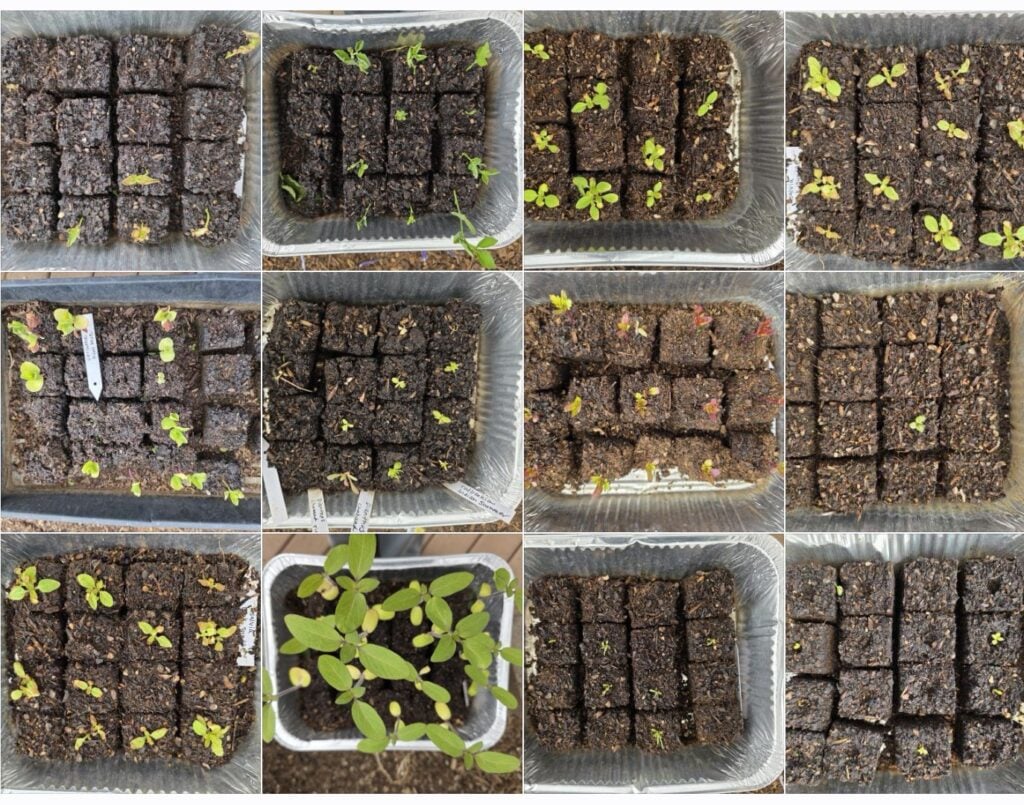
Yesterday when my husband tried to talk to me about the irrigation problems my brain froze, and I really don’t even know what he told me. I seriously have no idea. Why? Because I’m freaking out that I may fail. I’m panicking and certain that I don’t know what I’m doing. I am thinking that I have lost control of this flower project. Something that seemed completely doable and achievable at first is feeling overwhelming. I mentally curl up into a ball and wave the white flag. I want to abandon the project entirely. However, this is an opportunity to observe my patterns and shift my patterns. I get to decide how to move forward.
I decided to yank that white flag down and quit letting my nervous system patterns lead the charge. I can create a game plan, so that fear and the unexpected don’t derail me.
When this realization hit me, I was able to regroup. It is okay to struggle when learning, and it can be done safely.
I immediately burst into tears and told my husband, “I see what’s happening here. And it’s going to be okay, whatever happens is fine. I am doing the best I can. I am struggling to learn all of this, and whatever I learn, whatever successes follow, that’s good and that’s exactly where I need to be right now.”
So, I moved on. Suddenly I could think again. I could breathe again. I realized I was doing a damn good job learning a new skill and I should be terribly proud of that! I told my nervous system to calm down, it’s safe, and it’s okay that I’m struggling.
If I can learn to feel safe as I struggle as a learner – if I learn the skill of creating my own safety…I’ve moved mountains!
If I can recognize what my nervous system DOES in these situations, I can change it! I do not have to be chained to a response pattern that leaves me unable to function emotionally, mentally or physically. I simply must rewire my nervous system by talking to myself as I recognize my struggles and also recognize that the sky is not going to come crashing down. My nervous system will develop new routines – new habits that are productive and still keep me safe!
Homesteading trial and error is the perfect playground for rewiring your nervous system so that your body understands how to struggle and be safe simultaneously. Remember, homesteading can take place anywhere. Bake cookies from scratch or grow basil in your windowsill – these are all rooted in taking charge of your well-being by creating skills that create self-sufficiency. Dive into a new craft and see what challenges you can tackle.
I’ve created a little exercise to help create awareness around your safety issues and how it impacts your learning, Feel free to do this activity in your head, on paper, or simply talk it out with a friend or aloud by yourself.
Ask yourself these questions.
- Do you feel safe when learning?
- If not, why do you feel unsafe?
- What do you do when you feel unsafe?
- What can you do differently, to change the “safety drill” your nervous system routinely runs?
- What resources can you access to create safety as you learn? What other learning experiences have been successful for you and why? Can you replicate anything that helped you feel safe?
We can change our response by shifting the pattern. If your initial reaction is to throw in the towel in some shape or form, DO SOMETHING ELSE INSTEAD. This is challenging because your nervous system is going to tell you to follow a routine that has previously kept you safe. You must be the grown-up in the room who tells your nervous system that instead, you’re going to go listen to music, visit/call a friend or a mentor, listen to a podcast, or simply take a drive somewhere to remove yourself from the “safety drill” that has become your routine.
Often leaving the environment in which you got “triggered” can allow your emotional state to “reset.” Perhaps take a walk. Simply go into a different room.
Anything you can do to help your body reset can help shift the pattern.
If you must continue returning to a learning environment that does not feel safe, it is important to access resources that help create stability and support. If you are facing physical danger, you must reach out to the proper authorities. If the danger is emotional, who can you turn to for help, guidance, or support? If you believe a healthy environment simply cannot be achieved due to circumstances beyond your control, it may be time to consider other options.I have been in these situations, so I understand how challenging this can be.
Some environments intentionally keep people insecure, overwhelmed and doubtful of their own abilities. This is on PURPOSE because if you recognized your power, your self-worth – you could create change. See my article here regarding Homesteading Your Mind in a Narcissistic World. We live in a world in which “fear” is broadcast to us daily through mainstream media and social media. We must pay attention to how “fear” impacts our ability to learn and keeps our light dim. We all have a right to thrive and shine in this world, and therefore, share this beautiful light with others.
If you are dealing with a situation that you can begin to address on your own, simply consider this safe struggle an opportunity to shift your nervous system and therefore shift your mindset.
Give yourself time to think and gain perspective on your current struggles. Remind your brain that it’s okay. Talk to yourself kindly and with patience.
Struggling is okay, and it can be done safely. Getting rooted in this understanding is empowering and will propel you forward. A rooted belief in “safe struggle” allows you to shift your mindset in all new endeavors in life. Homestead Your Mind and…
Root. Move. Grow.