Colorado Mountain Dogs: An Interview with Breeder Cassie Monblatt
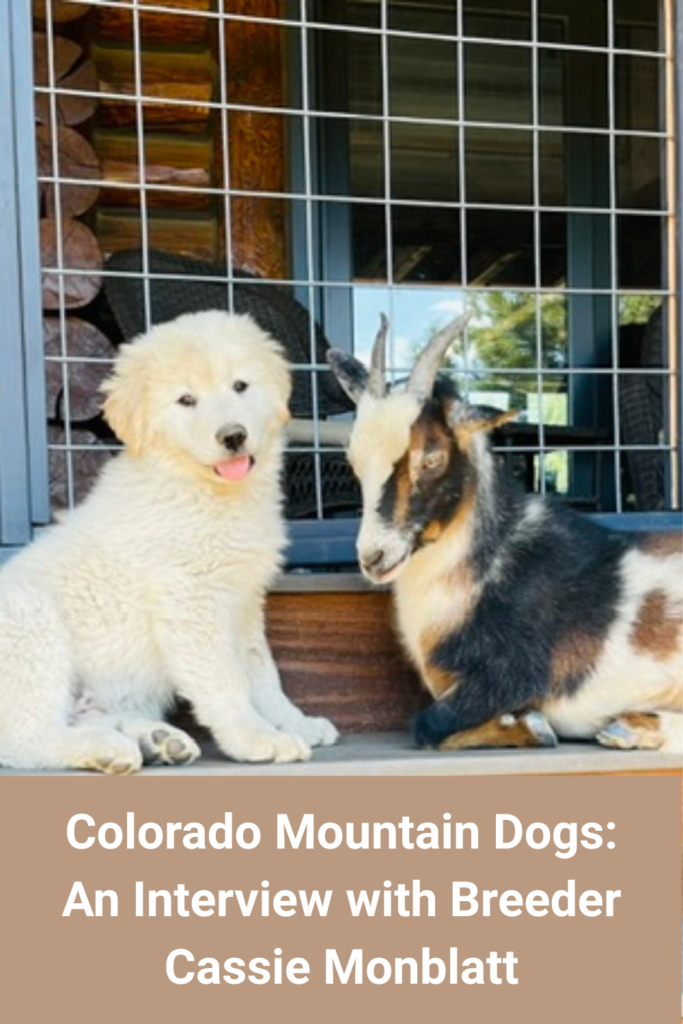
I have received so many questions about our beautiful Colorado Mountain Dogs from folks who check out our YT channel. On these reels I often highlight Huck, our youngest Colorado Mountain Dog, whom we received from Frisky Goat Ranch. Cassie Monblatt is the owner of Frisky Goat Ranch and also a dear friend of mine. Cassie and her family raise Colorado Mountain Dogs, Angora goats and Nigora goats. Our Colorado Mountain Dogs are such a source of joy for us, but also a crucial part of our homestead. As livestock guardian dogs, they assure us that our animals are always safe. I hope you enjoy this interview with Cassie. I simply couldn’t answer all the questions I was receiving so I headed straight to the source.
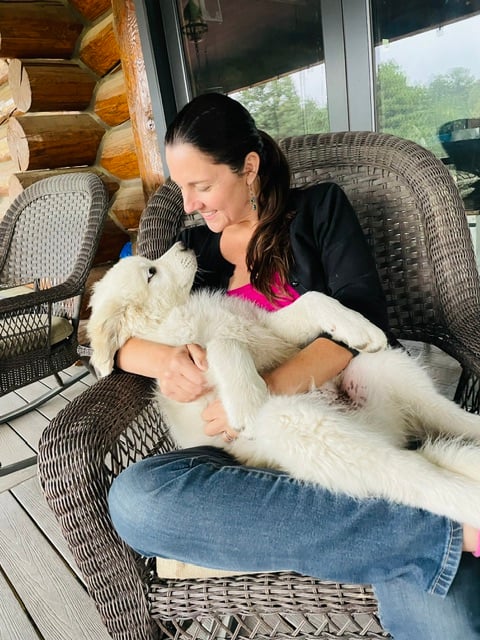
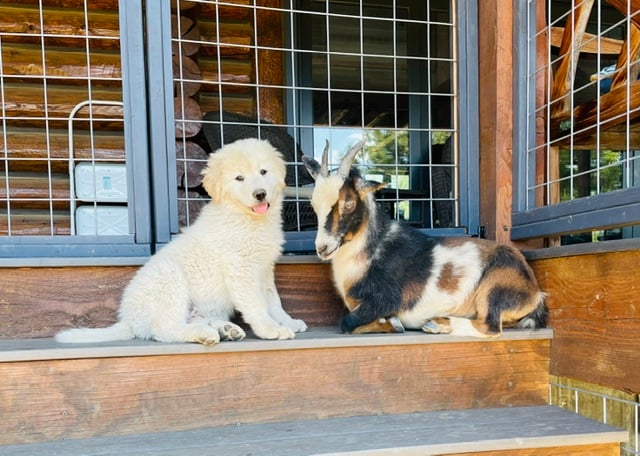
Cassie answers my questions below:
How did you get into Colorado Mountain Dog breeding?
Like many people, I wasn’t looking to become a breeder—I was simply looking for the right livestock guardian dogs for our ranch.
When we moved to the mountains of Colorado, protecting our goats became a necessity. We have coyotes, foxes, mountain lions, and black bears in the area, so I knew we needed dogs that could do the job. But I also knew I didn’t want a dog that couldn’t safely be around our family, friends, or visitors.
That’s what led me to the Colorado Mountain Dog.
Then Carlos came into our lives.
The very first night Carlos was here, he chased off two young black bears that had wandered onto our deck in the middle of the night. We would have had no idea that they had ever been there. That was the moment I knew I had found something special.
Over the years, Carlos continued to prove that a great livestock guardian isn’t just fearless—he’s thoughtful. He protected our livestock with complete confidence, yet welcomed guests, adored children, and somehow always seemed to know the difference between a real threat and someone who simply belonged.
Carlos became the foundation of everything we believe a Colorado Mountain Dog should be.
Today, we’re honored to carry his legacy forward through his sons, Diego and Enzo, as well as his full brother, Cedar. Every breeding decision we make is about preserving the traits that made Carlos so extraordinary: sound temperament, natural guardian instincts, intelligence, and the ability to know when to protect and when to simply enjoy a good belly rub.
What surprises first-time Colorado Mountain Dog owners the most?
How much they think.
People often imagine livestock guardian dogs as barking at everything that moves, but a well-bred Colorado Mountain Dog spends far more time observing than reacting. They’re constantly watching, evaluating, and deciding whether something truly deserves their attention.
They’re also incredibly affectionate.
After making their rounds checking on the goats, it’s not unusual to find one of our dogs flopped upside down at your feet, convinced the world should stop until they’ve received a proper belly rub.
The other surprise is how long they take to mature.
Like many livestock guardian breeds, they go through what the Colorado Mountain Dog community affectionately calls the “T-Rex stage.” It’s their teenage phase where they begin testing boundaries and discovering just how independent they are. It’s completely normal and usually makes for some entertaining stories, but it’s also when calm, consistent leadership is most important.
What makes a Colorado Mountain Dog different from other livestock guardian breeds?
For me, the answer is simple.
They’re discerning.
The Colorado Mountain Dog was intentionally developed to be a guardian that’s well suited for modern farms and ranches. They have the instincts to protect livestock, but they also have the ability to assess situations instead of simply reacting to them.
I think that’s what makes them so unique.
The best Colorado Mountain Dogs know the difference between a coyote and your friendly neighbor. They know when to quietly watch from a distance and when to stand their ground.
They’re not looking for conflict—they’re looking to prevent it.
That’s the balance we’re committed to preserving.
What are some non-negotiables when placing your puppies? Do you ever turn people away?
Absolutely and often.
In fact, I think one of the biggest responsibilities a breeder has is knowing when not to place a puppy.
Every family is different, and every puppy is different. Our job isn’t simply to sell puppies—it’s to make the best possible match so that both the puppy and its new family can thrive for years to come.
The biggest thing I’m looking for is purpose.
Colorado Mountain Dogs generally are not wired to be traditional couch dogs. They were bred to take responsibility for something. That purpose might be protecting goats, sheep, poultry, horses, a family on acreage, or in some cases even serving people in other meaningful ways. One of our girls is doing wonderful work alongside her owner through the Wounded Warrior Project.
What matters isn’t the specific job—it’s that they have one that suits their individual temperament.
When these dogs don’t have purpose, they’re often unhappy. The behaviors people sometimes call “problems” are usually a dog trying to fulfill the role it was born to do.
Because of that, I’m willing to say no if I don’t believe a placement is right.
I’d much rather disappoint someone before they take a puppy home than see that puppy experience the confusion and heartbreak of being rehomed later.
Our commitment doesn’t end the day a puppy leaves the ranch.
Every puppy is microchipped before it goes home, and if one of our dogs ever needs us—whether that’s six months or years later—they always have a safe place here. I never want one of our dogs sitting in a shelter wondering where its family went.
What should someone look for in a breeder?
Look beyond the puppies.
Meet the parents if you can. Ask about their temperament every bit as much as their health testing.
Ask how they behave around livestock, children, visitors, and strangers. Ask what kind of environment the puppies are being raised in and what experiences they’re exposed to before they go to their new home.
I also think a good breeder should be asking you plenty of questions.
If someone is willing to sell a livestock guardian puppy to anyone with a deposit, I’d question whether they’re truly putting the puppy first.
For us, this has never been about producing as many puppies as possible.
It’s about preserving an incredible breed and giving every puppy the best opportunity to succeed.
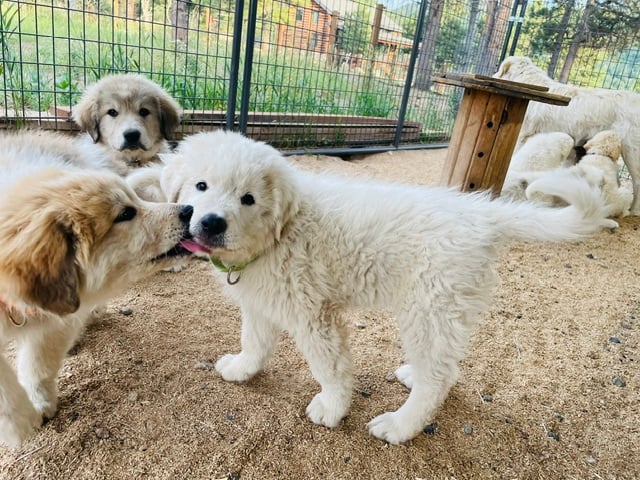
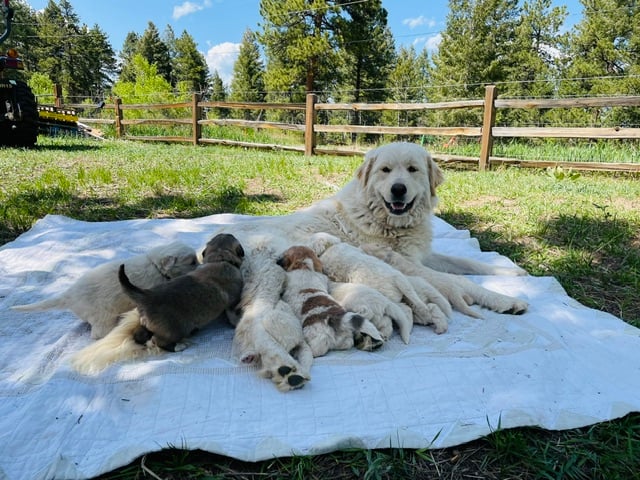
What does an ideal life look like for a Colorado Mountain Dog?
An ideal life is one where they’re needed.
That doesn’t necessarily mean hundreds of acres or a thousand sheep.
It means waking up every day knowing they have a responsibility.
Our puppies grow up surrounded by goats, chickens, cats, adult guardian dogs, tractors, visitors, wildlife, and the everyday activity of a working ranch. Those early experiences help them understand the world they’re being asked to protect.
Whenever possible, I also love seeing puppies grow up alongside experienced guardian dogs.
The older dogs teach lessons that people simply can’t. They show puppies how to respect livestock, how to react appropriately, and what life as a guardian looks like.
At the end of the day, Colorado Mountain Dogs don’t just want a home.
They want a purpose.
Can Colorado Mountain Dogs be family dogs, or are they happiest as working dogs?
I don’t think those are opposites.
The very best Colorado Mountain Dogs become beloved members of the family while fully embracing the work they were bred to do.
Most of our puppies become livestock guardians, but every puppy is an individual.
Occasionally we’ll have a puppy whose temperament suggests it may be happiest following a slightly different path, provided it still has meaningful work to do.
One of our girls has become an incredible service dog through the Wounded Warrior Project.
Different job.
Same purpose.
That’s what matters most.
When you evaluate an eight-week-old puppy, what personality traits are you already looking for?
At eight weeks I’m looking for tendencies rather than finished personalities.
I’m watching for confidence without being reckless, curiosity, resilience, awareness of what’s happening around them, and how naturally they interact with both people and livestock.
Some puppies naturally seem to observe before they act.
Others are little problem solvers.
Some are especially nurturing.
Some seem to notice everything.
Those early observations help us make the best match between each puppy and its future family.
Every puppy has different strengths, and I think part of our responsibility is recognizing them.
What’s the biggest misconception about livestock guardian dogs?
That they have to be aggressive.
The best livestock guardian dogs aren’t looking for a fight.
They’re looking to prevent one.
People also sometimes think these dogs need intensive obedience training to become successful guardians.
In reality, much of what makes a great livestock guardian begins with its parents—through the temperament and instincts they pass on genetically, and through the lessons puppies learn by growing up alongside experienced adult dogs while being exposed to the world they’ll one day protect.
Our role is to provide good examples, thoughtful exposure to the world around them, clear boundaries, and consistent reminders during that inevitable “T-Rex stage,” while giving them the time and opportunity to mature into the guardian they were born to become.
Can you tell when a puppy is naturally wired to be an exceptional guardian?
Sometimes, but it’s important to remember that we’re looking for potential, not certainty.
Even at a young age, some puppies stand out. They’re naturally more aware of their surroundings, notice changes before the others, recover quickly from something unexpected, or seem especially drawn to the livestock. Others have a calm confidence about them—they observe before they react and seem to think through situations rather than charging into them.
Those are all traits I pay close attention to, but they’re only part of the picture.
An exceptional livestock guardian is shaped by both nature and nurture. Genetics lay the foundation, while maturity, living alongside experienced guardian dogs, and thoughtful exposure to livestock and everyday ranch life help those instincts develop over time.
Every now and then, though, you witness something that reminds you just how deeply those instincts can be rooted.
When Diego was only eight months old, one of our goats went into labor while I wasn’t outside. Before I even realized what was happening, he stayed with her, gently cleaned the newborn kid, and quietly stood guard over the little family until I arrived.
No one taught him to do that.
Moments like that don’t happen because of obedience training. They’re the result of generations of thoughtful breeding, combined with an environment that allows those natural instincts to mature.
If you would like to reach out to Cassie for more information on Colorado Mountain Dogs please go to her website at Frisky Goat Ranch.
Thank you so much Cassie!
Here are two videos for your enjoyment. The first from Frisky Goat Ranch and the second from us at Mesa View Homestead.




I’ve lived in several rural areas where people’s GPs often roamed onto other people’s property. Do Colorado Mountain Dogs have the same roaming tendency? Do you train them to understand property boundaries?
These puppies are so incredibly cute!!
Yes they are ❤️❤️❤️ thank you for reading!