So What’s Your Food Story? And Is It Still Yours?
Food is tied to our identity in more ways than we typically realize. We often eat not just based on being hungry, but based on how we feel. Particular food items can trigger a feeling of safety, sadness, happiness or celebration – the list is never-ending.
Our own personal food story helps us get rooted in what we currently feel, know and understand to be true about food – and this is important. Food is a conduit to our well-being, connecting our minds and bodies, while impacting how we use our time, our resources, and ultimately, our how we live our lives.
Food is not just about how much we weigh.
Food is not just about access – to the best food or the healthiest food.
Food is not just about status – the fanciest most expensive restaurant.
Food is not just about my monthly meal plan and budget.
Absolutely all these things impact our food story.
Having enough food to survive comes first. But beyond those fundamental needs, there is another important part of our relationship with food worth examining: our food mindset.
In order to think about our food mindset we must understand what our story is – what food stories root us in our decision-making – the decision-making which impacts our daily lives?
My Food Story
I very much viewed food in terms of access to knowledge growing up. I watched my mom rotate through the same meals over and over in order to get food on the table. I watched my dad buy cookbooks, cut out recipes and gather his collection of food knowledge into files and ultimately create family traditions centered on his food choices.
Our father’s food choices were considered “gourmet” – these choices were extra special and required knowledge that not everyone was privy to. To be honest, it was a bit of a food snobbery mentality.
I’ll just say my parents didn’t shop at Aldi.
Food, Comfort, and Access
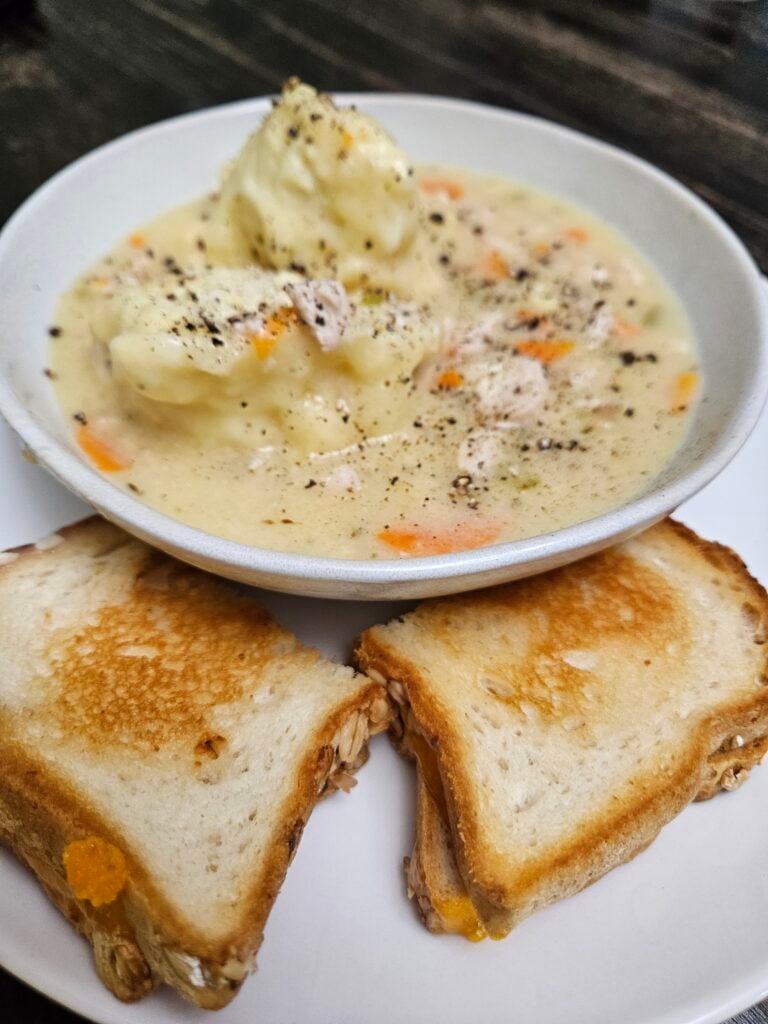
I craved comfort food. One of my best memories is walking home from grade school and our mother making us Campbell’s tomato soup with grilled cheese sandwiches. I’ll never forget the comfort and safety I felt from that lunch. As I visited other friends’ houses I discovered other kinds of comfort food I wasn’t allowed to eat – like SpaghettiOs. I desperately wanted SpaghettiOs. But I began early on to associate food labels and brands with belonging – or not.
Food became connected to access. Access to certain foods. Access to knowledge. Access to the freedom to decide what I wanted to eat or create. Access to how I wanted to feel. Comfort food meant safety for me.
Our parents were very brand conscious – they trusted certain brands and they also believed certain brands represented higher status. No-name brands were never purchased in our house, and other brands were bought on repeat – such as Pepperidge Farm. Certain brands were purchased based on their health promises – fat-free cookies were a staple at our house.
Who Were These Recipe Gods?
I was never taught to cook. One of the retold stories my family laughed about was the day I called a neighbor to ask how to boil an egg. The only cooking I recall learning about was around baking – specifically desserts. But my sister was really the guru there as well – she could make a mean batch of fudge.
Our father believed recipes had to be followed word by word. You didn’t add your ideas to a recipe. I remember watching him carefully read and take every step in order. I was mystified by the idea of creating a recipe – who were these recipe gods and how did they get this knowledge?
I was mind-blown in grade school when I visited my grandmother and she created a soup on the spot, and named it after me. It was the best soup I ever ate in my entire life. I recall that it had peas in it, not something I was particularly fond of, but I remember that she used a base of chicken broth – and I swear there was cream in it – and combined, it had the most amazing aroma that made me feel warm and loved.
My grandmother taught me that you didn’t need someone else’s recipe to create something to eat. I hadn’t understood that I could do this – and it was life-changing – I could actually create something of my own. I realized I had the power and potential to create – I just hadn’t quite figured out how to tap into it yet.
We Can Replant Our Food Stories
So what’s your food story? Your food story is important. It’s how we get rooted in decision-making as adults. I can notice and remember my story, and I can pull from it what is true and authentic to me today. I can ask questions, make new choices and decisions – and I can act on that new learning. When I learn something new about food and I try it out for me – such as creating my own cookie recipe – I can decide if that works, for me, or not.
Food stories give us a rooted place to start and grow from – we can replant at any time. No new rigid rules to follow – our story – our timeline – our own creative recipe about our life.
Happy Cooking.